How to Get a Price Estimate From a Hospital
Hospital prices are easier to find than they were, because two federal rules now require hospitals to publish them and to give some patients estimates in advance.
1. The hospital's posted charges
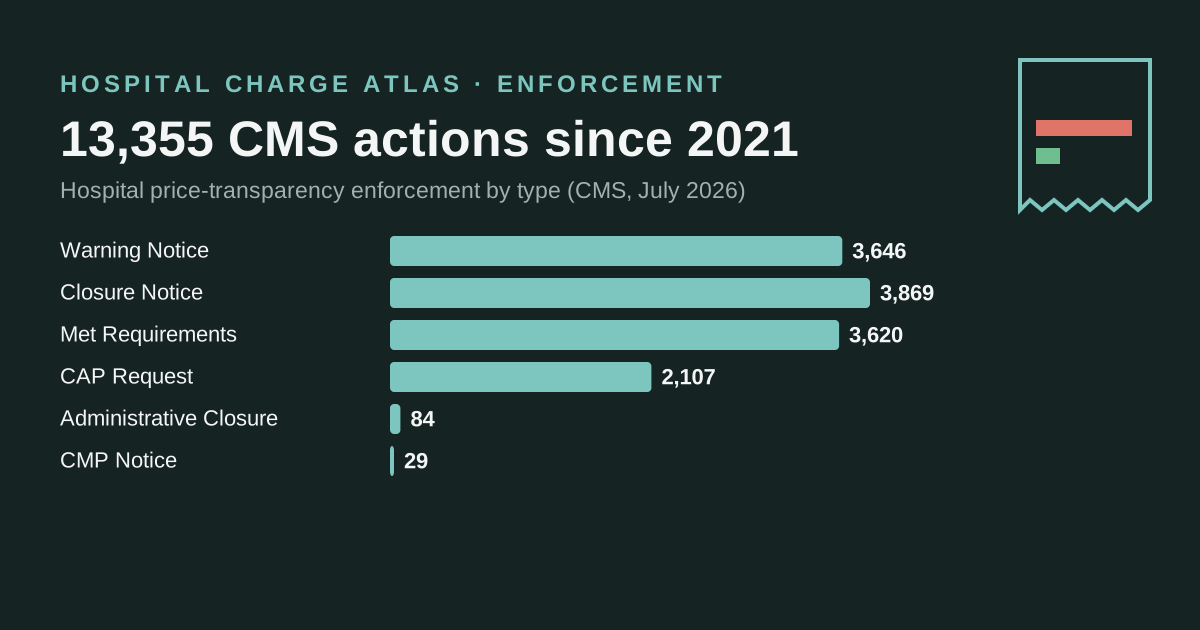
Since January 2021, every hospital must post a machine-readable file of its standard charges — gross charges, cash prices and the rates it has negotiated with each insurer — and a consumer-friendly list or estimator for at least 300 shoppable services (45 CFR 180.50 and 180.60). Search the hospital's site for "price transparency" or "standard charges". CMS enforces the rule: its list holds 13,355 actions so far, from warning notices to civil penalties; see the enforcement page.
2. A good-faith estimate if you are uninsured or paying yourself
Under the No Surprises Act, if you are uninsured or not using insurance and you schedule a service at least three business days ahead, the provider must give you a written good-faith estimate of the expected charges. If the final bill is at least $400 above it, you can dispute it through the federal patient-provider dispute resolution process, within 120 days of receiving the bill (45 CFR 149.620).
3. Your insurer's estimate if you are insured
Health plans must offer an online price-comparison tool showing your expected out-of-pocket cost for covered items and services. It is usually the most accurate estimate for an insured patient, because it uses your plan's negotiated rate and your remaining deductible.
4. Context from Medicare's numbers
Medicare's averages on this site are not your price, but they show where a hospital sits: how its list prices compare with others for the same stay, and how far its charges run above what Medicare pays. A hospital whose charges are far above its peers is worth asking about discounts or financial assistance before you are billed.
Start with the comparison tool to shortlist hospitals for your procedure.
Questions
Do hospitals have to tell me the price in advance?
Hospitals must post their standard charges, including payer-specific negotiated rates, online. Uninsured and self-pay patients who schedule a service at least three business days ahead are entitled to a good-faith estimate under the No Surprises Act.
What if my bill is much higher than the good-faith estimate?
If you are uninsured or self-pay and the bill is at least $400 above the estimate, you can start the federal patient-provider dispute resolution process within 120 days of the bill.